
Running and writing at a comfortable pace

After rebooting my relationship with running following a two year hiatus, I discovered the app Runna by Strava. The app purports to be a sort of virtual running couch. Which led me to reflect on the fact that despite running for over a decade I knew next to nothing about how to train and improve. My runs are more often dictated by the local green spaces than laps or splits. I believe technology can democratize expertise and raise the skill floor for different hobbies. Without ever having ran track or had a coach there’s nothing for me to compare it to but I quite enjoy the app so far.
Each week of the program includes “easy runs” where the goal is to run at a comfortable pace. My virtual coach advised me to relax my shoulders and wrists, stand up straight, focus on smooth breathing at a pace where you could hold a conversation. It made me realize my tendency to pick up my pace when my favorite song came on—shoutout to “R U Mine?” By the Arctic Monkeys—quickly runing early into the exercise. After weeks of pushing my pace during the not-so-easy runs, the virtual coach chastised me. “You don’t get fitness points for beating the pace!”
There are several benefits to running at a comfortable pace. You can run for longer, getting in more volume for training. It’s apparently how real athletes approach long distance races like marathons. The beginning should feel too slow, once you’ve settled in then start pushing the pace. But leave some gas in the tank for the end.
The same advice applies to writing. I’ve studied the career of many writers and I’ve become convinced it takes 10 years of dedicated practice in order to achieve professional grade writing. That’s an insane amount of time. If you got a job and they told you it would take 10 years before they started paying you, you’d probably tell them to fuck off. While talent exists, it’s not the primary indicator of an individual’s success. It all comes down to consistency.
Writing is impossible without without going at a sustainable pace. Like many aspiring writers, I’ve taken several writing workshop classes. Inevitably there is a person who has written their first novel and expresses how desperate they are to get it sold. Writing a book is a tremendous amount of work, a substantial achievement in of itself. Without some kind of external validation it can feel like wasted time. Especially since these are knowledge workers who have been rewarded handsomely for their time and energy in their careers. Reading their work, there’s a lot to like, because there’s something to like in everyone’s work. But you can tell it’s not quite up to the level of quality you’d expect of a traditionally published author.
Quality alone isn’t sufficient either. In a world where everyone’s got a book in them, combined with increasingly fewer people reading for fun, meeting the quality bar is no guarantee of success. I read a joke somewhere that more people want to write memoirs than actually read them. If your attitude is that you need to get published then I’m afraid you probably won’t have the stamina to sustain the inevitable rejections.
It sounds like I’m gatekeeping but that isn’t how I see it. I’m obsessed with studying the economics and sales of books. Because my day job as a data engineer involves the statistical analysis of sales data for tech companies. It’s a statistical fact that most people will generate 0 or close to 0 revenue from the sales of their books. Books are a competitive. Just look at the number of talented writers who take on teaching jobs in order to health insurance and a steady paycheck. I’m sure they also enjoy teaching, but let’s be real, many do it to survive.
Which is why it’s so important to work at a slow pace. It can be so frustrating, wanting to make progress and control everything in our minds. We can make 5 year plans and 10 year plans about where we want our writing to be. We can only control our output and the quality, up to a certain extent. Since quality itself is an accumulation of experience over failed attempts.
The longer I try this writing thing the more I discover it takes way longer than I initially thought. It’s counterintuitive, but it’s slowing down that often yields the actual results we’re looking for, when we find the right words.
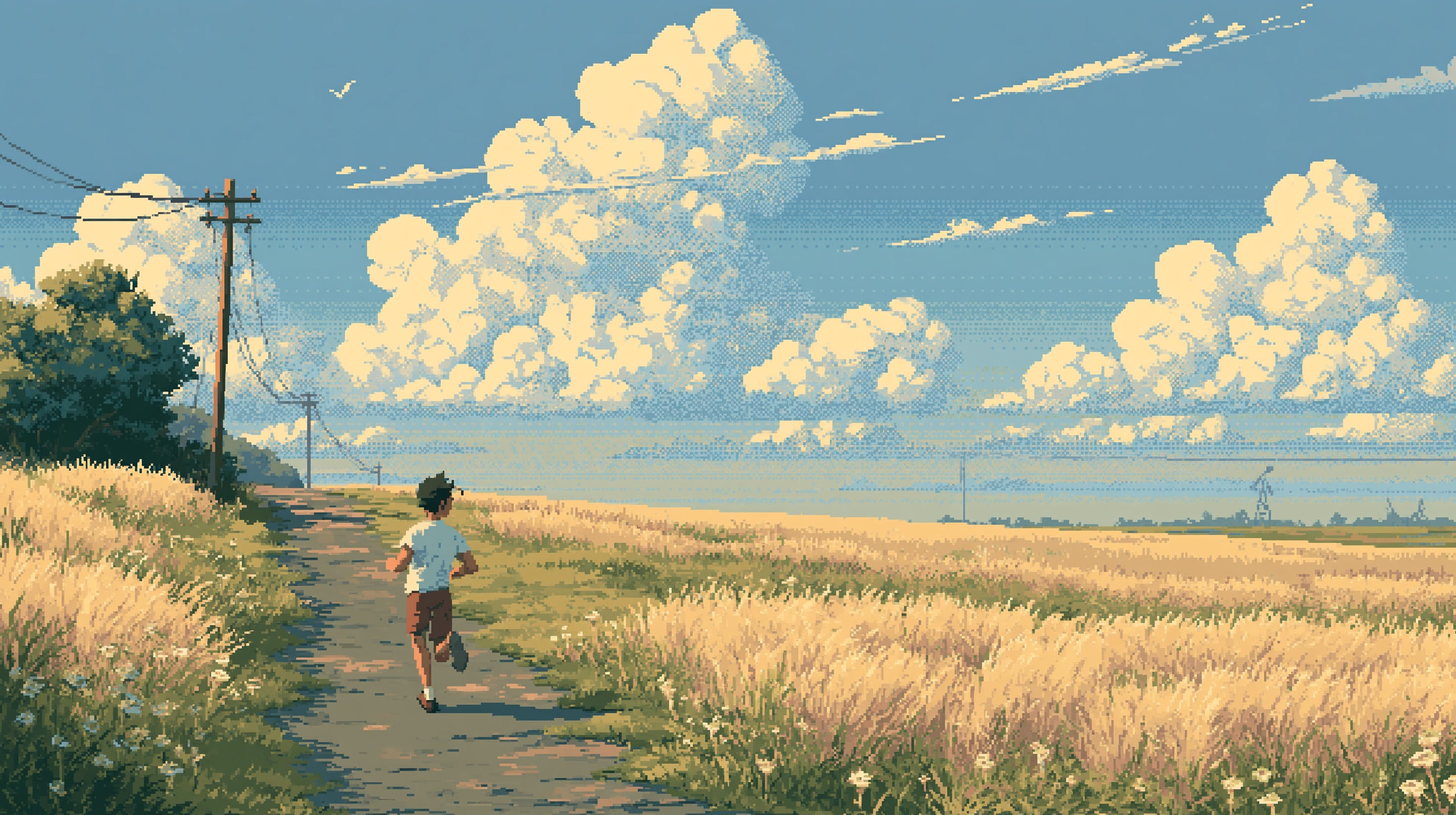
Perhaps you run with the goal of running a marathon or losing weight. Eventually, though, you just start doing it because you like it. It’s great fun, the steady rhythm of sneakers hitting pavement under a clear blue sky with your favorite songs playing in your ear. The health benefits become a bonus on top instead of the prime motivator.
All of this to say the old cliche: journey before destination. All self-help advice and writing on writing boils down to this simple sentiment. People write because they want to quit their day job, or seem smart, or have a cool, creative job.
After you write, something weird happens. You think more clearly. It becomes more obvious what is a distraction from what is actually helping you become the person you’d like to be. You’re able to direct your energy towards self-improvement in a more efficient way. To become a better write is to be a better person. Fiction or non-fiction, it’s about what it means to live a good life. And a full life is its own reward.